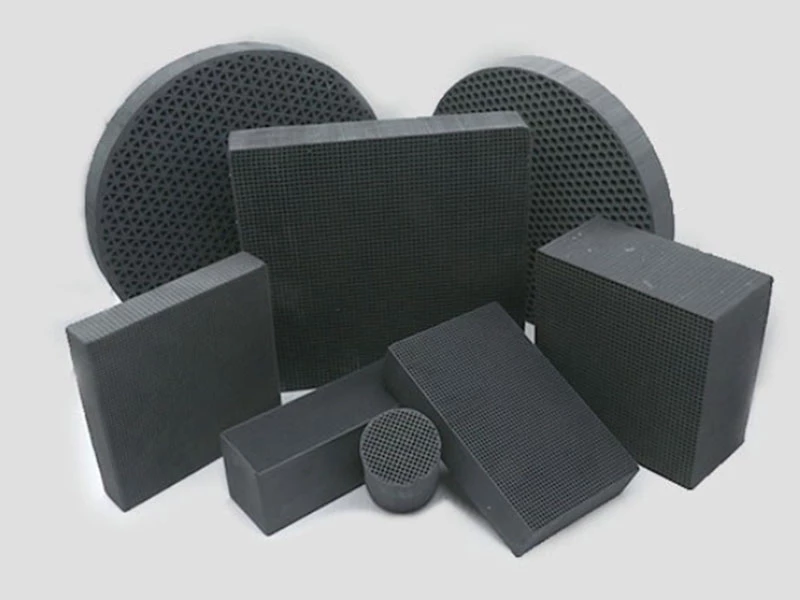
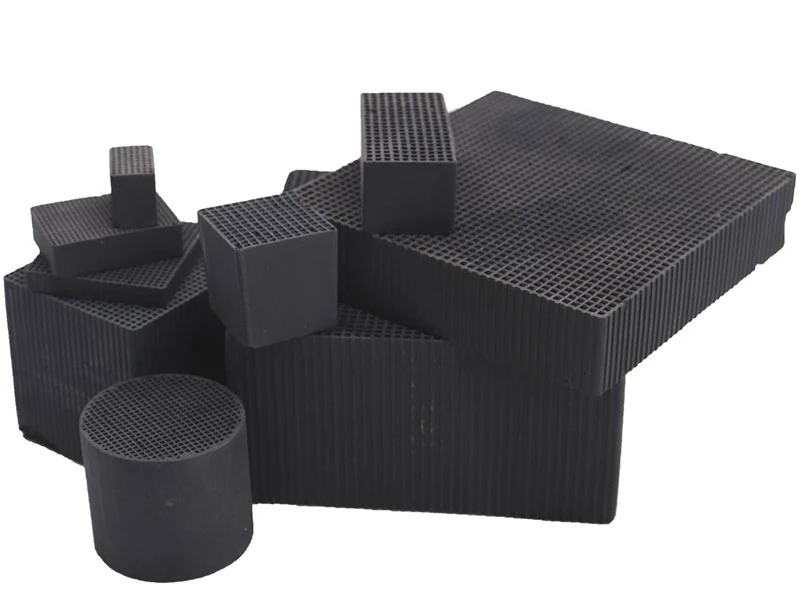
Product Introduction
Honeycomb activated carbon is manufactured with high-quality coal-based activated carbon as the raw material. It is molded via honeycomb-shaped dies and processed through high-temperature activation and calcination.
Boasting a large specific surface area, low through-hole resistance, well-developed micropores, high adsorption capacity and extended service life, honeycomb activated carbon is widely utilized in air pollution control. Its purification principle is based on the adsorption method: exhaust gas is brought into contact with porous activated carbon with a large surface area, where pollutants in the gas are adsorbed to achieve purification effects.
Applications
A. Exhaust gas treatment and air purificationB. Removal of organic substances, pigments, odors and other contaminants from water to improve water quality; applicable to water purification processes in water treatment plantsC. Elimination of impurities and odors from food and its raw materials; used in beverage purification and beer deodorizationD. Other fields including automobile exhaust purification, gas separation and liquid decolorization.
For optimal performance in air pollution control, honeycomb activated carbon is recommended to be configured with two parallel-connected adsorbers. This setup is suitable for both intermittent and continuous exhaust treatment scenarios: one adsorber operates in adsorption mode while the other undergoes desorption and regeneration. The desorbed pollutants should be disposed of via catalytic combustion prior to emission.
During operation, high-temperature conditions must be avoided, as elevated temperatures will reduce the adsorption capacity of the product—adsorption efficiency diminishes as temperature rises.
Meanwhile, high dust content in the gas stream should be strictly prevented. Tar, dust and mist can clog the micropores of activated carbon, increase wind resistance and degrade adsorption performance. In such cases, a dust filtration device must be installed upstream of the honeycomb activated carbon to enhance operational efficiency and prolong its service life.